The Encounter with the Other
Project Hail Mary and the need to communicate with those who are different from us
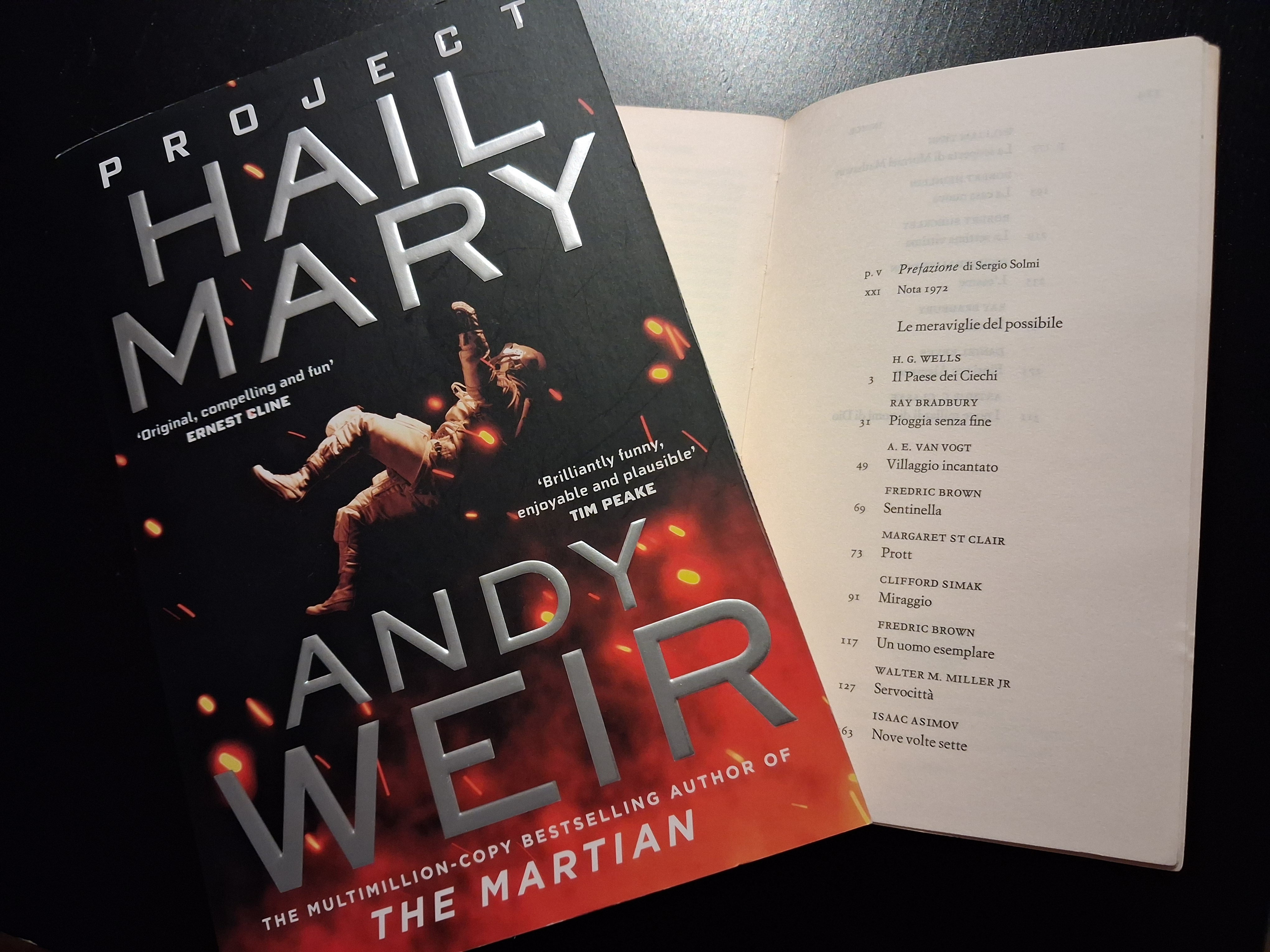
An encounter that definitely could not be missing from Casa Donatalina is the one with «Project Hail Mary» by Andy Weir.
If you like science fiction, you should read it. If you DON’T like science fiction, you should read it. Because this book (which, incidentally, has also been turned into a highly enjoyable film) is not unmissable only because of its scientific accuracy or its plot — which, admittedly, revolves around the rather unoriginal need to save Earth from an imminent catastrophe — but above all because of its focus on the encounter with the other; on the very human, fragile and incredibly difficult need to communicate with someone who is other than ourselves.
In this sense, Andy Weir does a remarkable job, because he keeps the reader glued to the page while showing us how difficult it is for human beings to bring together their scientific skills, their feelings, and their contact with the other, the stranger. And he manages never to become boring, either when describing engineering problems and solutions or when portraying feelings and communication difficulties.
While reading it, and rereading it several times, I thought: ah yes, I know something about this. About this particularly bewildering double nature, above all: the scientist who has very poor social skills, works shut away in a laboratory surrounded by numbers and facts, little accustomed to interacting with people; and who, at some point, is forced by circumstances to open up new frontiers of communication with the other, with the different — in fact, the very different.
But that is not all. The book is also interesting because we live in an age in which this forced encounter with the other is almost omnipresent, and certainly difficult to ignore: migratory phenomena (both those caused by catastrophes and those made possible simply by greater global mobility) are reshaping the planet and the society we know in dramatic and unprecedented ways, and they force all of us — scientists, non-scientists, everyone — to confront the other. To redefine, in a sense, what it means to be human.
This line of thought is what led me to suggest this encounter by illustrating it with a photograph that brings together Project Hail Mary with an old edition of Le meraviglie del possibile (Einaudi).
In this anthology you will find two stories that give me goosebumps because of how relevant they still are, even though they were written decades ago. The first is, of course, “Sentinel” by Fredric Brown. If you have not read it, look it up, because it is a very short but brilliant story about what “us” and “them” mean. And if you are feeling brave, while you are at it, also read “Flowers for Algernon” by Daniel Keyes. This one is less directly connected to the theme of the “encounter with the other”, but it is very much part of the same thread: redefining what it means to be human.
Because two things are profoundly human: language and violence. The domination of others, the distrust of those who are different, are two sides of the same failure to communicate.
Someone once told me that an Italian guy survived during the Second World War because he knew another language. He found himself caught in a raid, with Nazis taking away or shooting unarmed civilians; he had studied some German and tried to speak to the Nazi officer. I do not know exactly what he said to him, but the soldier hesitated to shoot someone who spoke his language: he could no longer see him as an object, as something that could simply be annihilated. The prisoner had become a person.
I am telling you this story, this mixture of books and old stories passed on orally, because I believe that today, more than ever, science and communication need to travel in parallel: we need science to face the disasters — environmental, war and health-related — of our time, but we also need, more than ever, to communicate with the other.