šŸ‡®šŸ‡¹ Italiano | šŸ‡¬šŸ‡§ English | šŸ‡ŖšŸ‡ø EspaƱol | šŸ‡©šŸ‡Ŗ Deutsch

Notebook

Notes, encounters and thoughts from the journey of Casa Donatalina.

A space to share the behind-the-scenes stories of the books, the stories and the people who bring them to life.

La libreria di Casa Donatalina
Investing in books

Notebook #7

A Place not to Disappear

24 September 2026

A reflection I had while reading Four Thousand Weeks by Oliver Burkeman: we shouldn’t ask ā€œwhat pays the most?ā€, but ā€œwhat is worth putting into my life?ā€. I’m not writing about this book here, but it is certainly an interesting read, and one I recommend.

People are reading less and less: according to the latest statistics, 4 out of 10 Italians don’t read (Repubblica).

Across Europe, average reading scores have declined (and quite significantly) in recent years (LinkedIn).

At a time when people are reading less and less, I have decided to:

At a time when people are reading less and less, I have decided to:
– start a website about books
– write about books
– buy books
– create an online library of books
– join bookshop affiliate programmes

In other words, I don’t just talk about books… I’m even trying to make Casa Donatalina financially sustainable through books… What a fool! :D

If people are reading less and less, why keep investing time and money in books? Wouldn’t it make more sense to jump on the bandwagon of the winner? Ride the wave of whatever trend is working?

Maybe. But perhaps the question isn’t just how trendy reading is, or how much money can be made from books. Perhaps the question is also what we want to keep in existence.

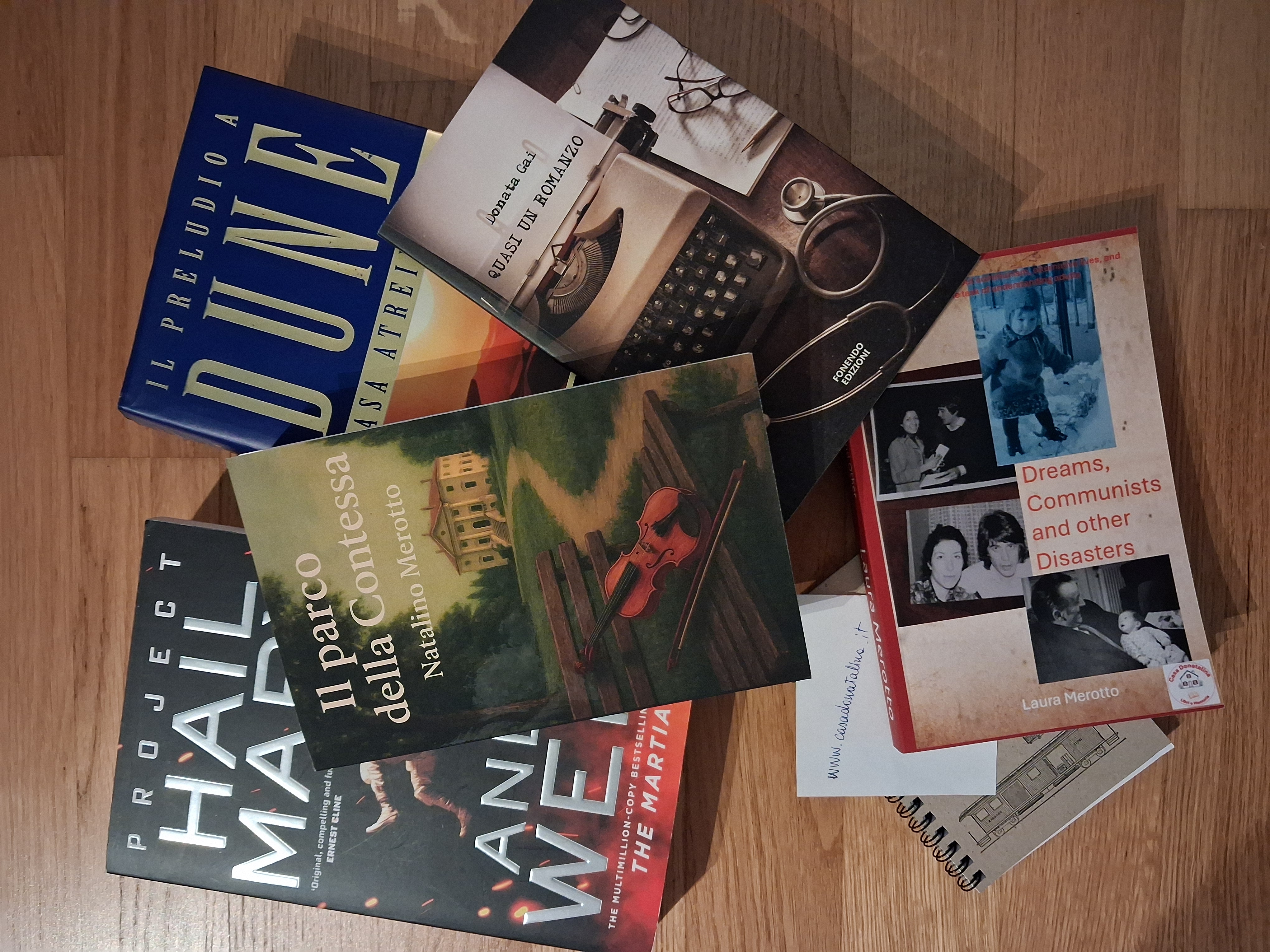
And this connects very well with Dreams, communists and other disasters: there is that thread of ā€œdreaming of a different lifeā€, but this time applied to our relationship with books and to the choice to build something even when the context doesn’t seem to encourage it.

Because there is something here that goes beyond convenience. There is memory: preserving books, texts, ideas, traces of people who might otherwise disappear. There is desire: continuing to do something that matters to us even when it isn’t what ā€œmakes senseā€ to do. And there is resistance to the idea that everything must justify itself economically: especially at a time when work, productivity and income are becoming increasingly dominant criteria.

There is a desire to bring something into existence that we believe has value, even when it isn’t particularly profitable, trendy or marketable. A desire to preserve, tell stories, share.

Even when it doesn’t pay the bills.

(Maybe especially when it doesn’t pay the bills.)

Sometimes we build something simply because we don’t want it to disappear.

Casa Donatalina is also this: a small place for the things we don’t want to disappear.


Stories continue to live when they are shared.

If you found this reflection interesting and would like to comment, write to me! info@casadonatalina.it
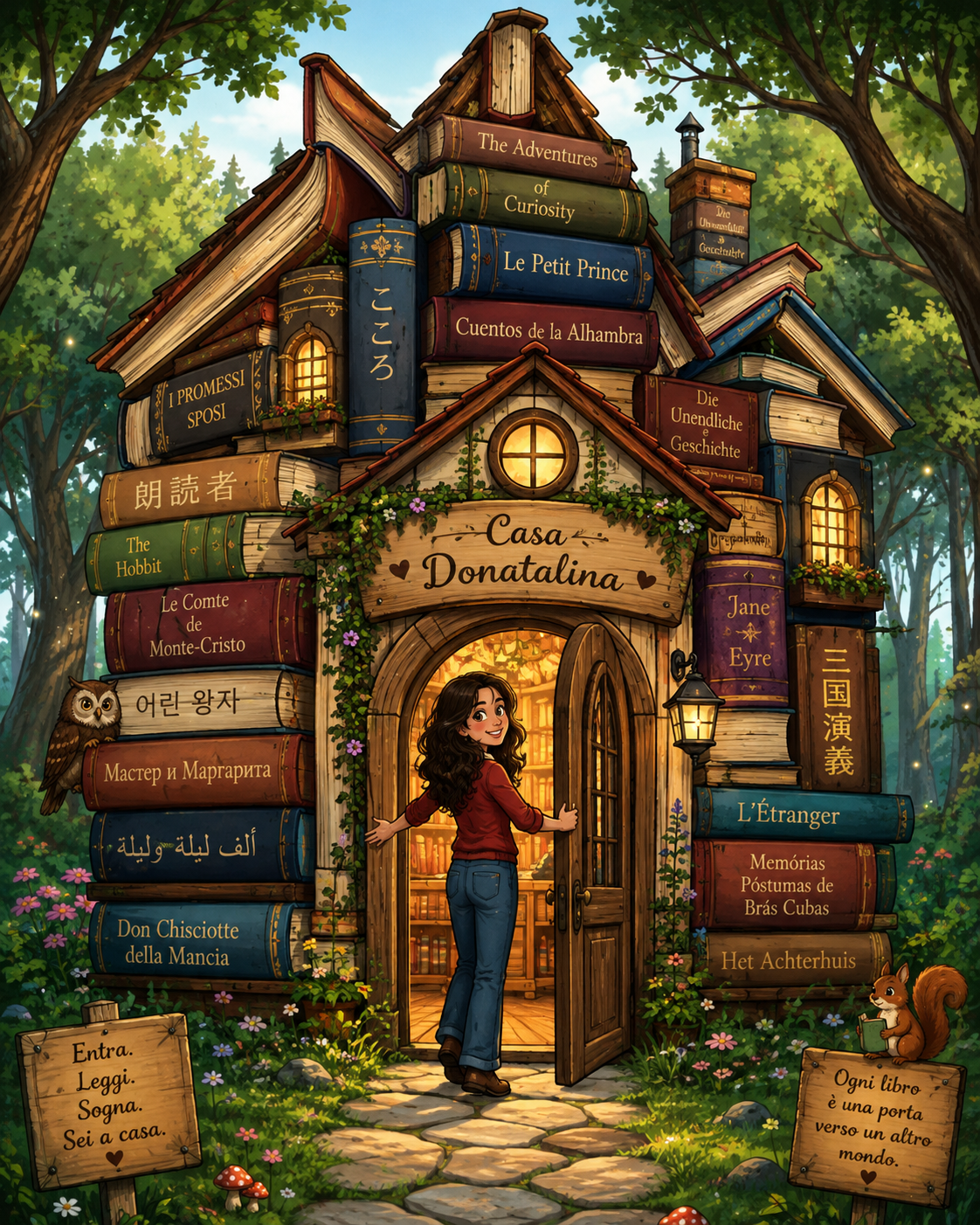
Libri di Casa Donatalina

Notebook #6

A House That Lives

September 6, 2026

As you may have noticed, CasaDonatalina has a new page dedicated to readers' comments.

These comments are, for me, the most precious thing. The people who have stepped into CasaDonatalina and taken the time to leave a comment, a criticism, an opinion… well, they are the people who bring this project to life and turn this ā€œhouseā€ into a place of encounter.

These are comments that have reached me by email (info@casadonatalina.it), or through LinkedIn, Facebook or WhatsApp.

Some of them moved me, others made me think. All of them have helped me evolve, both as a person and as a ā€œprojectā€, and all of them contribute to making CasaDonatalina a place where people can meet.

Over the next few months, I would like to add some stories recovered from Natalino and Donata’s archive and, of course, more Encounters around books and topics of current interest.

But it is you who bring this place to life!

So please keep reading, writing to me, criticising, and telling me what you would like to see at CasaDonatalina. What topics would you like to talk about? What has made you curious? And what, on the other hand, don't you like?

Let me know!


Stories continue to live when they are shared.

If you enjoyed this piece and would like to comment on it, write to me! info@casadonatalina.it

Artificial Intelligence

Journal #5

Should We Pretend AI Doesn't Exist?

1 September 2026

This is not an encounter with a book, but a reflection sparked by a comment on this website. So I’m sharing it here as a little ā€œbehind the scenesā€.

The topic is the use of Artificial Intelligence.

So what exactly are we supposed to do? Pretend AI doesn't exist? šŸ˜„

I don't want AI to write books or make movies, even if fantasy worlds look way more realistic with modern CGI: I enjoy stories that stem from human mind.

I don't want AI to make music: I prefer the fascinating ability of human hands mastering a complex instrument.

I don't want AI to make art or illustrations: I prefer human creativity.

And yet, I use AI. A lot.

I use it to help me debug code, correct a sentence when I'm unsure, find information and references, analyse data, identify patterns. And sometimes I use it to illustrate something I have in mind, because I can be good at some things, but when it comes to drawing, I suck.

This recently earned me some criticism.

«Tsk, tsk», someone commented under one of my posts. «You used AI for a picture. Don't you know you're STEALING from artists and illustrators? And besides, the image sucks».

The latter is, of course, debatable. šŸ˜„

But what I found interesting is that the post wasn't about the picture. It was about my website, my articles, my books, the little personal publishing project I've been building. None of that seemed to matter. The AI-generated picture was what inflamed their spirit.

I explained that the picture was simply there to illustrate an idea.

«Tsk tsk», came the answer. «You should use Canva. It's easy.»

Oh, well. Is it?

I did try Canva for some projects. It is intuitive, yes. But I didn't get the results I had in mind.

Maybe I'm not very good at Canva, or maybe not every tool is good for every task, every person and every situation.

And this is where the interaction made me think.

What exactly are we supposed to do with AI?

I use it as a tool.

I can handwrite, but when I write an article, I use a keyboard. It's probably not so cute as cursive handwriting, but I'm writing an article, not showing off my calligraphy.

Similarly, I could technically grow some of my own food, but I go to the supermarket instead. Yes, vegetables may taste better when picked fresh from a garden. But I still buy them in the supermarket.

AI is a tool. Using it doesn't necessarily mean being lazy: sometimes it simply means choosing the tool that helps you get the result you want.

Of course, AI is not ethically neutral. There are legitimate questions about copyright, training data, regulation, transparency, environmental costs, quality. For example, I personally hate when training AI means destroying books (I talked about this in another article).

Those discussions matter.

But the person who confronted me had a much simpler position: AI "steals" from artists, therefore I should use Canva instead.

So I'm wondering:

Is using AI morally not acceptable? And if so, where do we draw the line? Are all AI morally bad or just some of them? Does it depend on the task? Is AI acceptable for coding but not for pictures because artists are artists and programmers are not? (Yes, this is a provocative question, of course).

I respect artists. I love art, in the broadest sense, including writing, cinema, illustration and music.

I also don't particularly like the idea of AI replacing human creativity. Sometimes I even get pissed off when AI can do something better or faster than I can.

But AI exists.

We can regulate it. We can criticise it. We can decide where we don't want to use it. We can demand better rules for the people whose work contributes to these systems.

But pretending it doesn't exist, or expecting people simply not to use it… seriously? Luddism isn't a strategy for dealing with technological change.

So, what are we supposed to do?

The illustrative picture is a Canva template, so I don't piss anyone off šŸ˜„


Stories continue to live when they are shared.

If you enjoyed this story and would like to comment on it, write to me! info@casadonatalina.it
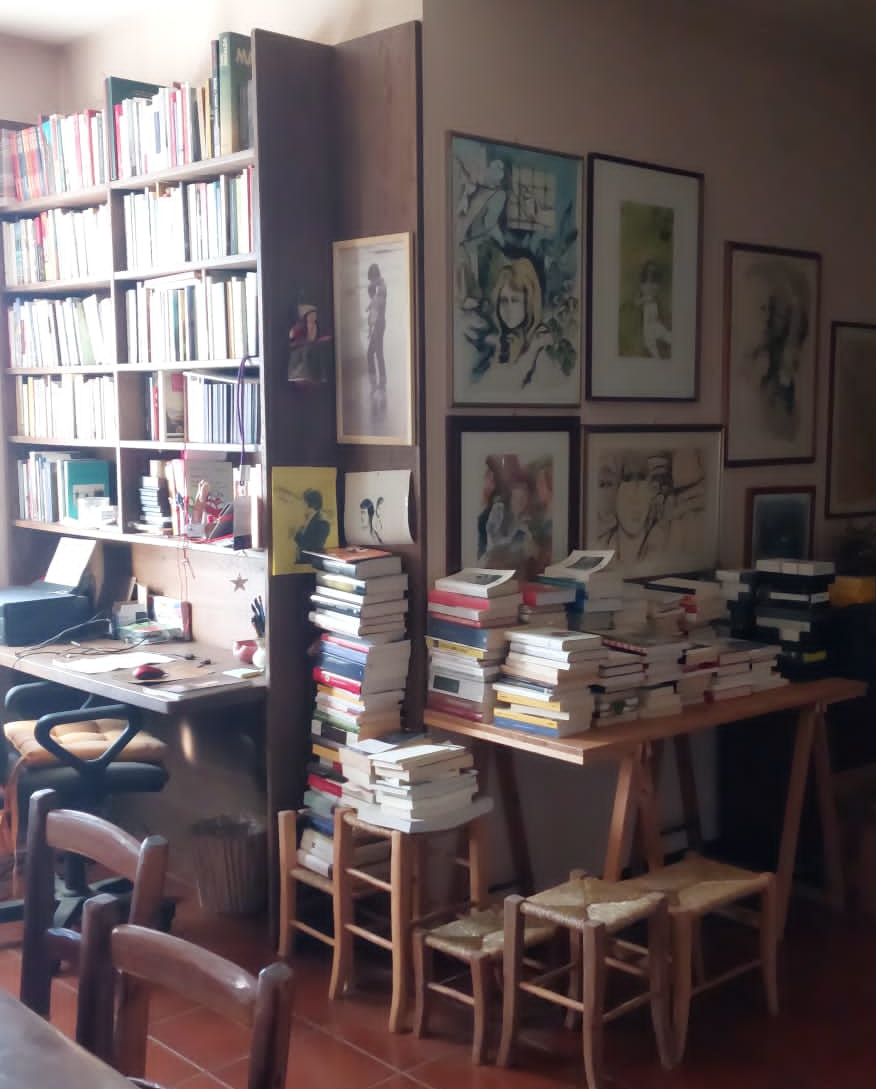

Casa Donatalina

Notebook #4

The reason why

20 August 2026

I know science from the inside, and I have cultivated writing throughout my career. At this point, these two strands of my experience come together naturally.

Some people have asked me: but why a website? What's the point?

I said that the point is to make the words of my parents available to a wider audience, publish their books, and create a virtual house that resembles the one they created during their lives.

It is true, but this is just the beginning – it's the part about my parents. Let's now talk about the "me" part. Why do I spend time building and maintaining a multilingual website about books, encounters around books, and so on?

Well, this has less to do with my parents and more to do with who I am.

I am not a journalist. Nor a translator. Nor an HTML programmer.

I am a person who, after starting a publishing house and a website to make my family's voices available, realized that these things are actually part of who I am.

I am an engineer who has spent a career working with complex scientific topics and communicating them to different audiences, but I have also cultivated my writing and communication skills.

What attracts me to writing, maintaining a website, publishing and translating… is the opportunity to make interesting ideas, difficult concepts, or surprising experiences meaningful to other people. And, of course, to do this in different languages. Because communication is (and always has been) also about languages.

So alongside my "real job", I have written and published books and articles, created and edited content for my own multilingual publishing project, and worked extensively across languages and audiences. I have also undertaken formal training in creative writing. These activities have given me a different perspective on language, narrative and the relationship between writer and reader.

The urge to publish my parents’ books gave me the opportunity to bring this combination of scientific expertise, curiosity and writing to Casa Donatalina — and to create a space where I can share ideas, stories and passions with others, and hopefully make them meaningful to someone else.

So, in the end, that's the point: to open the doors of my house and let you meet its books and passions.


Stories continue to live when they are shared.

If you liked this story or wnat to comment on it, write to me! info@casadonatalina.it

English edition of Sogni, comunisti e altri disastri

Notebook #3

Why I translated my book into English

31 July 2026

When I published Sogni, comunisti e altri disastri, I did so with the hope of entertaining people, of telling a story that could bring a few hours of joy to those who read it.

But stories are meant to be shared, and I soon realized that many of the people I care about do not speak Italian and were therefore excluded from the stories of Casa Donatalina.

So it was for them that I decided to translate the book into English.

It sounds easy: you say, ā€œI'll translate it into English, reach a wider audience, make my friends happyā€...

But actually it is an extremely difficult undertaking.

As I translated, I soon realized just how many Italian cultural references there are in the book. And I had to start adding notes, explaining things, and trying to find a way to say, in credible English, this or that thing that seems obvious and trivial until you actually have to translate it.

Who is Alfredino? Who is Pertini? Why the escalator?

It was a difficult yet extremely educational journey. I learned that a translator does not simply translate words: they translate a whole world of cultural references, bringing a setting, a history and a culture into the words they choose.

So no, you can't simply have AI do it. It's not the same thing.

I'm not sure I did it well, but I did it with passion and with people I care about in mind. So, if it's not perfect, you know who to complain to!

If you have comments, criticism or suggestions for improving the translation, I will be happy to read them.


Stories continue to live when they are shared.

If you enjoyed this story, if you have questions about the translation, or if you simply want to write to me, let me know: info@casadonatalina.it


Books at Casa Donatalina

Notebook #2

A House Full of Books

30 July 2026

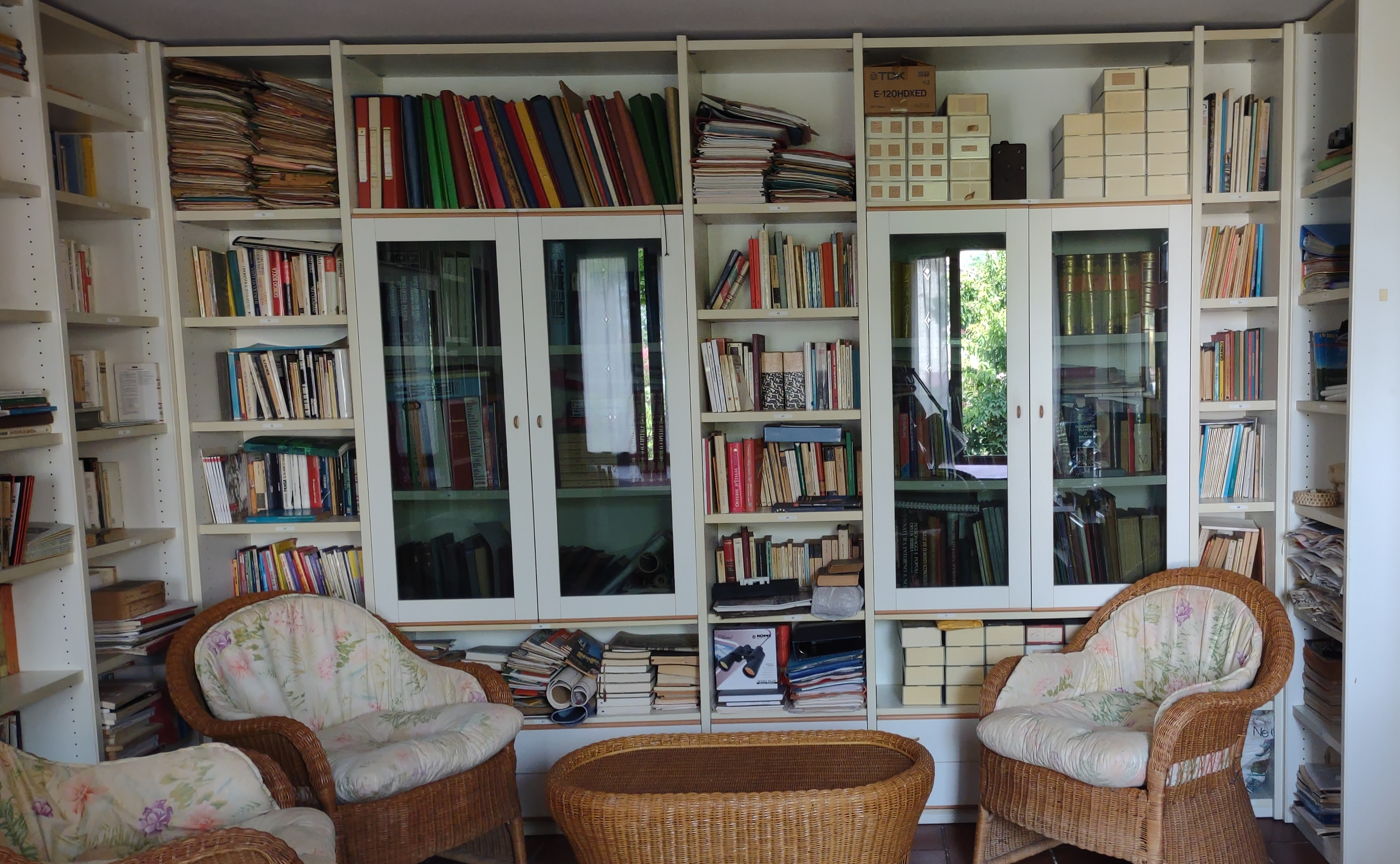
There are more than six thousand books in Casa Donatalina. Some were read once and then forgotten for years. Others have been reread, underlined, lent out, and found again. Some came from friends, while others have been part of our family for decades.

This website was also born from the desire not to let all this treasure remain on the shelves to just get dusty.

We can't put six thousand books online, of course. But we can tell the stories of the ones we loved, the ones that made us think, and the ones that kept us company at a particular moment in our lives.

And perhaps, through our reading, introduce some of them to you as well. In the Meetings section, as this website grows, you will find some of the books we have encountered along the way.


Stories continue to live when they are shared.

If there are books you would like to tell us about, comment on, or that you would like to see featured in an article, let me know! info@casadonatalina.it


The study at Casa Donatalina

Notebook #1

Why Casa Donatalina

29 July 2026

Today, a small project that means a lot to me officially begins: Casa Donatalina. The name comes from my parents' names (Donata and Natalino), and casa means home.

It is a space dedicated to my family's books (but not only). Books that are different from one another, but connected by a common thread: the desire to preserve and share stories that deserve to keep living. The desire to share these books then gave rise to the idea of expanding Casa Donatalina to include other encounters, but you will discover that as you explore the website.

For now, I would like to start by introducing you to the first book.

It is the novel written by my father: Il Parco della Contessa. You can find it in the Books section of this website.

When my dad passed away, the manuscript was still unfinished. I decided to collect his notes, study his style and complete the work with one precise goal: to make sure that, as much as possible, it would be his book, not mine.

It was a long, emotional and, at times, difficult journey. But it was also one of the most beautiful ways I have found to continue a dialogue with him.

If you love stories born from passion, memory and the desire not to let words be lost, I hope this book will spark your curiosity.

In the next notebooks, I will tell you more about the novel, its characters and the journey that brought me here.

Welcome to Casa Donatalina.


Stories continue to live when they are shared.

If this story reminded you of someone, a place or an important book, write to me! info@casadonatalina.it

Write to me

You can write to me at: info@casadonatalina.it