«Only Briefly Here, Without Meeting»
María Ospina and the fleeting appearance of animals and people in the world
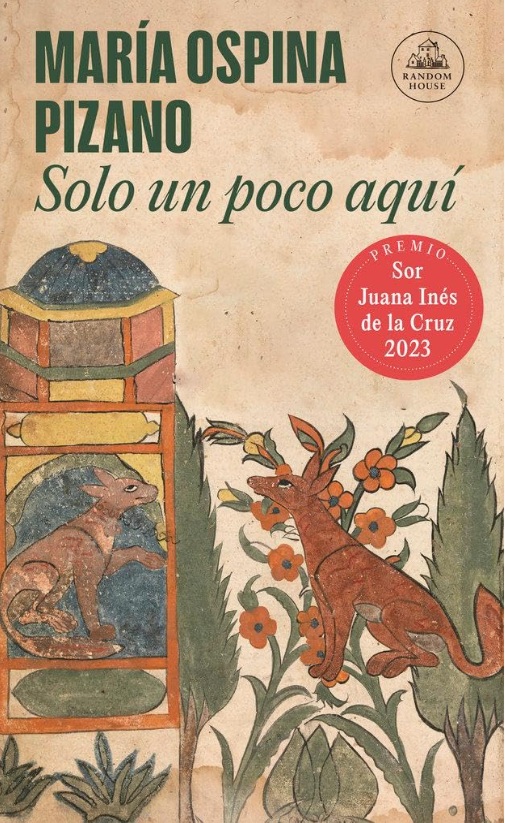
Living between different languages also means, sometimes, looking for new places where you can practise a «comfort» language (in my case, Italian, Spanish and English, in that order). Or, put another way, new places where you can escape for a couple of hours from full immersion in a language that you can handle but still find difficult, and which therefore presents a continuous and exhausting cognitive challenge (Swiss German, in my case).
In this search, my friend B. and I stumbled upon an independent bookshop in Zurich and one of its events: El Club de Lectura, a Latin American literature book club. Intrigued, we went to one of the meetings: B. with the desire to discover something new connected to the literature of places that are part of her roots; me, attracted by the possibility of chatting in a comfortable language; both of us fascinated by the possibility of discovering a book we had not yet encountered.
The book being discussed was «Solo un poco aquí» by María Ospina Pizano. She is a Colombian author, which appeals to me because, despite my passion for reading, I have not very often come across South American authors. On the one hand, I was educated in Italy, and my education focused mainly on Italian and European literature; on the other, I have occasionally discovered Latin American writers by chance, and I have always wanted to explore their approach more deeply, especially because I sense, between the lines of their writing, cultural differences that I have not yet managed to define precisely.
I must confess that I found Ospina's book difficult to read. The author's style is a peculiar mixture, because she brings scientific rigour onto the same page (when telling stories about animals from the point of view of a human observer) alongside poetic flights of imagination (in her choice of words and metaphors). I therefore found it decidedly different from the books I am used to: far removed from traditional fables (although perhaps it retains traces of them?), far removed from the conventional structure of a novel, and decidedly political in its denunciation, through the stories of various animals (a little dog, a porcupine, a bird, an insect), of the ecological disasters caused by human beings.
The truth? I found it interesting, but repetitive. I had hoped to find more «pre-Columbian cultural roots», which I was unable to identify; and I had hoped that, at the book club, I would find someone who could guide me a little in discovering this author, as an expert or literature teacher might.
I did, however, find some interesting ideas: for example, one striking feature of this book is the complete lack of communication between humans and animals. Men and women observe, interact with, or pass by animals without seeing them; sometimes they would like to save them, sometimes they would like to possess them; sometimes they love them, while at other times they remain indifferent. Sometimes they share a destiny of migration or solitude. But in every case, they are unable to understand them or communicate with them. I think this is where the author is particularly good at showing us that we are all part of the same world, and that non-human beings also have the right to live; but that we are making a great mess of things with our presumption that we can regulate, decide, kill, possess… without even understanding.
And so I closed the book with the bitter feeling that, if I had enjoyed Project Hail Mary for its theme of encountering the other, here the other is never actually encountered. Here, the other is a fleeting presence in the world (solo un poco aquí, after all – it means Only briefly here), just like us, but we fail to realise it. We are close to one another, we share the same space and, sometimes, even the same fate, yet we still fail to truly see one another. Perhaps we should learn to look with different eyes, to recognise presences we are accustomed to overlooking. But what eyes do we need to do so?