The simulation ran beautifully. That was the first warning sign.
October 2026
The Interface | Technology, Institutions, Society
The simulation ran beautifully. That was the first warning sign.
I asked an AI to help me write a numerical simulation, and it did, quickly. I went back to check the equations it had implemented, and it was a good idea, because the equations were wrong. And so, of course, were some of the resulting calculations.
The results looked nice and plausible, but to a trained eye (and by trained eye I mean someone who learned fluid dynamics when AI was not around to help at all) the flow around the profile was too good.
The whole thing moved too well and did not crash at some random point downstream. Too easy to be true. So I went back to the AI angrily, insulted it, and made it check again, four times, with my inputs, until I was sure it was not bending reality anywhere.
Then came the part where I had to describe the results for a scientific paper. The AI offered a physical interpretation: fluent, confident, grammatically sound…and wrong! I had to disagree, explain why, and wait for it to revise, again and again. I checked with colleagues, with the published literature and with my own critical thinking, until I arrived at an explanation I believe in.
Code errors usually show up as crashes or absurd numbers. Sometimes they look perfectly fine, until a human mind notices something is off. A wrong explanation of reasonable-looking numbers is even quieter, and it can slip into a report or a decision.
I am leaving out the details so that this post does not only make sense to aerospace engineers. I tell this story because I see more and more young colleagues using AI to write code (which is fine if you know how to check what it does), and to explain the results, which worries me more. In my experience AI handles patterns far better than physics, and it does not always a good job when it comes to infer or deduce something from data. I use AI a lot myself: it is fast at debugging and helps when I forget a line of code or the past tense of a German verb, but it cannot do the thinking part of our job.
If I could add one course to engineering curricula (and not only engineering), it would be: How easily we are tricked into believing that AI can do the thinking for us (and what to do about it)
If you use AI for work, do you have a similar experience? Do you spend a lot of time spotting AI mistakes or do you just trust it?
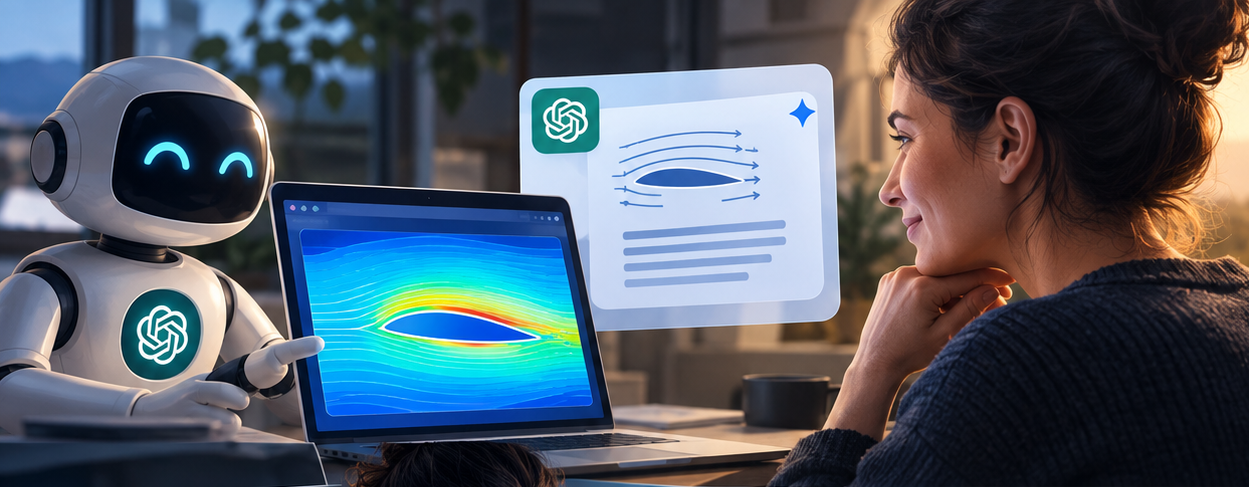
Image created with AI. The flow around the profile is not to be trusted of course! 😄
The Interface | Technology, Institutions, Society
#InterfaceTechInstitutionsSociety #AILiteracy #CriticalThinking