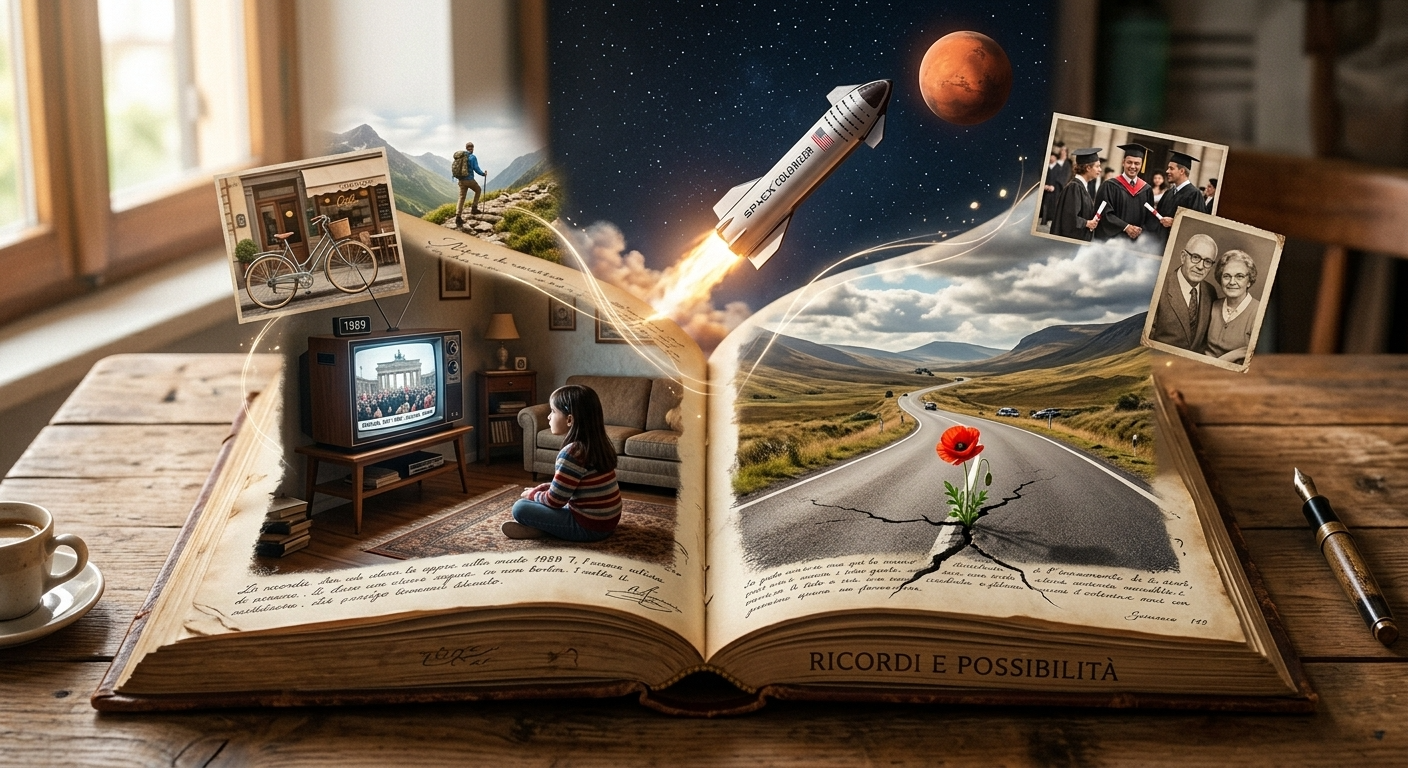
Behind the scenes of «Dreams, Communists and Other Disasters»: an interview with the author
Where does Lidia come from? How much of the author is there in the girl at the heart of the story? And why does the book combine childhood memories with dreams and alternative lives? We talked with the author about it.
Q. Let’s start with the obvious question: how autobiographical is «Dreams, Communists and Other Disasters»?
A. Obviously, very much!
Q. So that little girl is you?
A. Yes. Including the flaws and the unbearable tendency to challenge everything, get pissed off and swear. I wanted to show the truth, for once: we are always surrounded by such sugar-coated stories, with characters who have to be likeable at all costs…
Q. So is the protagonist, Lidia, an unlikeable child?
A. I hope not. But she is real, at least.
Q. Are the other characters real too?
A. Almost. They are based on real-life experiences, but each character is actually a mixture of real people. For example, the antagonist is the sum of three children who insulted me because I came from a communist family, although he talks like one particular classmate of mine at the time. The friends are a summary of my childhood friendships, but they are not portraits of individual people. Rather, they represent the loyal friend who thinks logically, the emotional but generally pragmatic friend, the friend you are always arguing with very heatedly but who, deep down, is still your friend…
Q. The antagonist is interesting indeed: he insults the protagonist because of her family and political background, but then fights alongside her when he sees an injustice towards another girl in their group…
A. Of course, because that is what actually happened. Children often repeat what they hear from the adults around them, but underneath that they have a personality of their own, and when it comes out, you can see it. Mauro came from a family where communists were to be blamed as a matter of principle, and Lidia finds it irritating that he does not understand issues that are part of everyday life for her, such as the debate about social justice; and yet, somehow, they are friends.
Q. The 1980s certainly were interesting in your case.
A. They were interesting for everyone, I think. My story simply shows how they were seen by a child who perhaps had a slightly unusual point of view.
Q. In the second part of the book, the story becomes more dreamlike, more fantastical.
A. Yes, the other stories are based on dreams I have had (hence the title of the book), obviously reworked… I don't usually dream in such detail. I included them here because they seemed like the perfect continuation of the story, of memory: my unconscious gave me a couple of assists, and I reworked them with my real-life experience. For example, the last story starts with a dream in which I wake up in another city and have made different choices. Without giving away any spoilers, I can say that the rest of the story is what I would have done if it had really happened.
Q. The book seems almost to have two different souls: in the first part, the reality of childhood; in the second, a dreamlike version of adult life. Why this change in structure? Is it intentional?
A. Yes, it is intentional. I wanted to show my experience, my memory of childhood, because I find it funny and formative; but I also wanted to show my experience of the years that followed, of adult life. The thing is, adult life is often made up of broken promises, opportunities that never came, or injustices. So, instead of showing the resentment, the bitterness caused by these things, I wanted to tell them by showing the other side: the fun that we can still have in adult life, which is not to stop imagining our lives, what we would or would not like to do.
Q. So, deep down, those who say you are angry are right. Existentially speaking, I mean.
A. Who wouldn't be? I lost my parents too early, and with them an enormous point of reference, two valuable people of great depth. I invented a publishing house and a website to continue talking with them and with their story, and to make them known to other people too.
Q. The anger, or resentment, doesn't seem to stem only from this, but also from professional life, or from professional choices.
A. Again, who wouldn't be pissed off? You study, you work hard, you get a degree, you try to integrate yourself well into a competitive world of work… and then there is no job, or it isn't stable, or it requires compromises you cannot accept. It seems normal to me that you should ask yourself whether you made the right choices or not. I just try to ask myself that question with a little self-irony. And I hope people can recognise themselves in this story: I mean, lots of people have probably wondered what would have happened if they had made different choices.
Q. But perhaps not many people had communist parents as children, a grandfather who tried to save them from the communists, and such an uncompromising way of looking at adults.
A. Well, uncompromising seems like a strong word to me; let's just say I was quite critical from an early age. In any case, it is true that my parents had a way of life that permeated my whole experience.
Q. Were they, in a sense, «heavy» parents, or at least demanding ones? I get the impression that Lidia grew up in a context where expectations were quite high: would those parents have accepted a daughter who was less brilliant, less political, less intellectually engaged?
A. Yes, my parents were «heavy» and demanding parents: they gave me a life full of stimulation and interesting people, but also a somewhat difficult inner inheritance, if you like. And yes, I think they would have accepted a daughter who made different choices, even less «prestigious» ones in terms of intellectual challenge. Of course, they thought that going to university would be good for me in order to develop my potential properly, but if I hadn't gone and had chosen a less ambitious job, they would have accepted it.
So yes, it is true that not many people will have had parents like mine, and not many children will have grown up immersed in such a politicised environment, but I think the story is funny because the experience is more universal than that: after all, all families shape you, instilling habits, neuroses and flaws that you then carry with you in the way you «are» as an adult, right? And I bet many people, as children, found themselves looking at the adult world and judging it with eyes different from the ones they have today. I find it interesting to rediscover, to recover those eyes, and see how different they can be from the eyes normally attributed to children. Because I bet there are lots of kids who are less stupid than adults expect them to be.
Q. Would you have preferred a different childhood? A more conventional one, perhaps?
A. No, I wouldn't have wanted a different childhood. At most, I would have liked to know how to make better use of the opportunities that this childhood gave me. But that is probably a feeling shared by many people.
Q. So you hope that someone, reading your story, will recognise themselves in it?
A. Well, I guess everyone hopes that. You publish a story because you hope it might have some value for other people too. I hope a reader can have fun and perhaps reflect on the experience of those years, if they lived through them, or see one possible version of that experience if they didn't. And perhaps think that if they are not happy with what their adult life is like now, they can still imagine a different one. I think that is what people do when they write stories, isn't it?
If you would like to read the book, you can find it here: Dreams, Communists and Other Disasters .